Inspiring! Thanks for sharing! It is so true that the one with the highest score defines the limits of what's possible in our heads. If it wasn't for you, I would probably not try to score higher as I would think it is nearly impossible.
Hi psychedelic electronic fans, I just put out a new track today. I made the music in Bitwig and the visuals in Touchdesigner (YouTube video). Thanks for listening, and have a beautiful day!
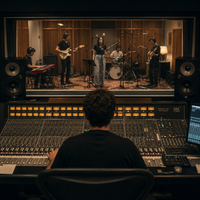
Question: Mixing in untreated rooms is 90% knowing the room and 10% the room itself. Facts or strongly disagree?
🎚️ Some producers swear that if you truly know your room, you can mix anywhere, even without treatment. Others say an untreated room will lie to you no matter how well you “learn” it.
Depends. A CONSISTENTLY bad room is useable if you learn it. A room that is bad in different ways every day (e.g. a small room that sounds different if the bed is made or not) is never gonna work.
I always like to think of visual analogies for audio stuff - it helps me answer questions like this. I imagine an untreated room as being similar to a screen that had a variety of issues:
color distortions (frequency response issues) burn in (room resonances) backlight issues (reflection-based phase issues) Maybe others too.
Well, if I was a video editor working on a screen with all those problems, it seems like there are certain ways that I'd be able to adapt and make pretty accurate guesses about what a proper screen would show, but other things I would be way more likely to get wrong, or just not be able to perceive at all because they're literally absent on my busted screen.
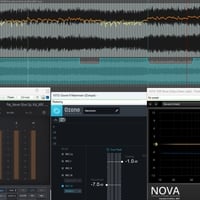
Going back to an untreated room, it seems obvious to me that there are some ways a skilled mixer could adapt, but it would make their work a lot harder and involve a lot more guessing, and they'd almost definitely not even be able to perceive some issues. Checking on headphones would become a much more important part of the process. and that would involve its own things to interpret and adapt to.
So I think clearly room treatment is really important. But to that end, as others have said, it's not all or nothing. Incremental change can really help, even just by making it clearer how the room is affecting your sound. Anything helps. I've been following Jesco at acousticsinsider.com and his stuff helped me understand this topic so much better than before!
My take is that we hear our mixes differently when we come in from a long break or a few days - so in a room with build ups masking frequencies it's going to be much harder - headphones I think this works for for sure because there is not necessarily the build up and you can flatten with software
We use cookies to improve your experience. Essential cookies keep the site running. We also use optional cookies to enhance performance, analyze traffic, and personalize ads. By clicking “Accept”, you agree to the use of all cookies.

Dec 11
Dec 12
Dec 14, 22:39