Boston Turns Fifty And The Basement Demo Still Wins
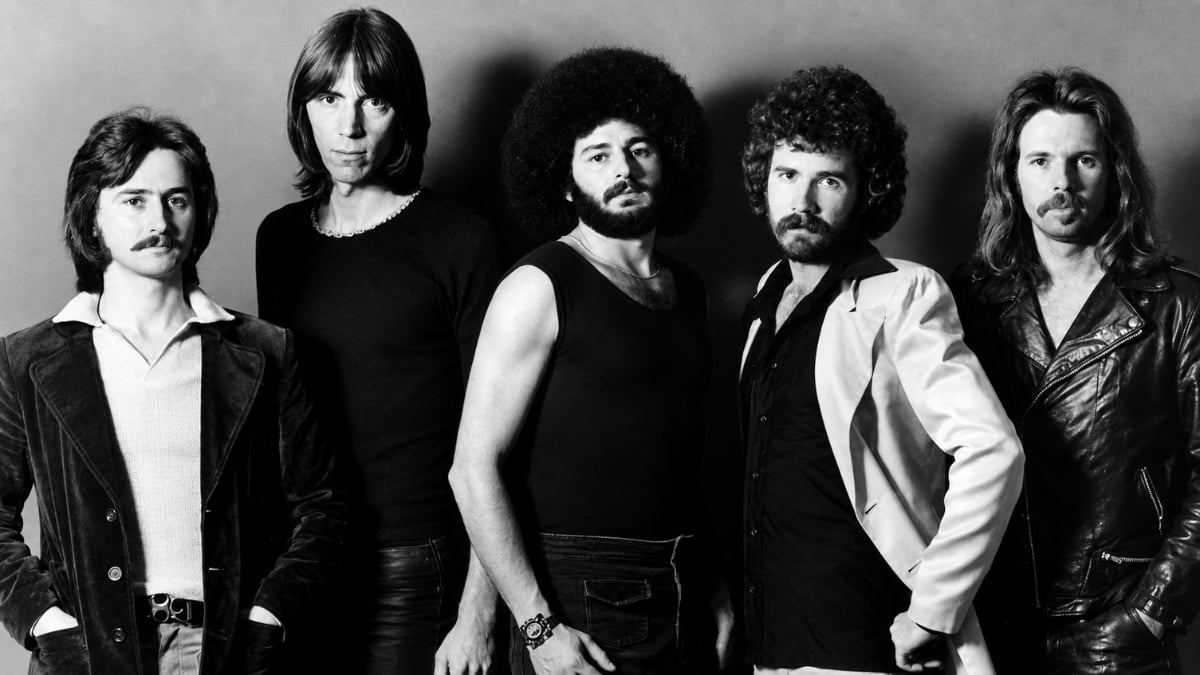
Fifty years ago this week, a song recorded next to a furnace in a Watertown, Massachusetts basement walked onto the Billboard Hot 100 and never really left. On August 25, 2026, the exact fiftieth birthday of Boston's debut album, Impex Records announced a 50th anniversary edition built around Tom Scholz's long lost demos, the tapes he mailed to labels before anyone said yes. Scholz restored and remastered them himself with Boston guitarist Gary Pihl. And "More Than a Feeling" hit the Hot 100 on September 18, 1976, making this the anniversary of a home recording quietly beating the professional studio system.
Back Then: The Origin Vibe
Scholz was not a rock star in waiting. He had a master's degree from MIT and a job as a product design engineer at Polaroid, where he racked up more than a dozen patents. His boss asked once whether he might quit for music. Scholz said the odds were one in a million. Meanwhile he spent nights in a cramped basement he later called a tiny little space next to the furnace, ducking because he stands six foot five, surrounded by gear he built himself. Five years went into "More Than a Feeling." He sent a final demo to twenty four labels with money for exactly one more shot. Epic had already rejected an earlier version with a letter he found insulting enough to keep. It hangs framed.
The Spark That Lit It
Epic wanted the album cut in Los Angeles with adult supervision, the exact thing that would have killed it. So producer John Boylan ran a decoy. He flew Brad Delp, Barry Goudreau, Sib Hashian and Fran Sheehan out west and cut "Let Me Take You Home Tonight" so the label had something to look at. Scholz stayed home and built the record alone. Boylan later said his job was mostly shielding what was happening from the record company. What you hear on the radio is, by Scholz's own account, a couple of weeks of him laying guitar tracks down exactly the way he had done them on the demos.
The Beat Anatomy
The groove is patient. It walks to the chorus instead of running, and the drums are doing something smarter than hitting hard. Scholz had never properly mic'd a kit, so Boylan flew engineer Paul Grupp in from Los Angeles to teach him. That lesson is audible: the kit sits forward without swallowing the guitars. At mixdown Boylan gated the snare to cut hi-hat bleed and sharpen the backbeat. Scholz had also been splicing tape into drum loops long before a loop was a menu item, which is why the pulse never wobbles.
 Textures + Sauce
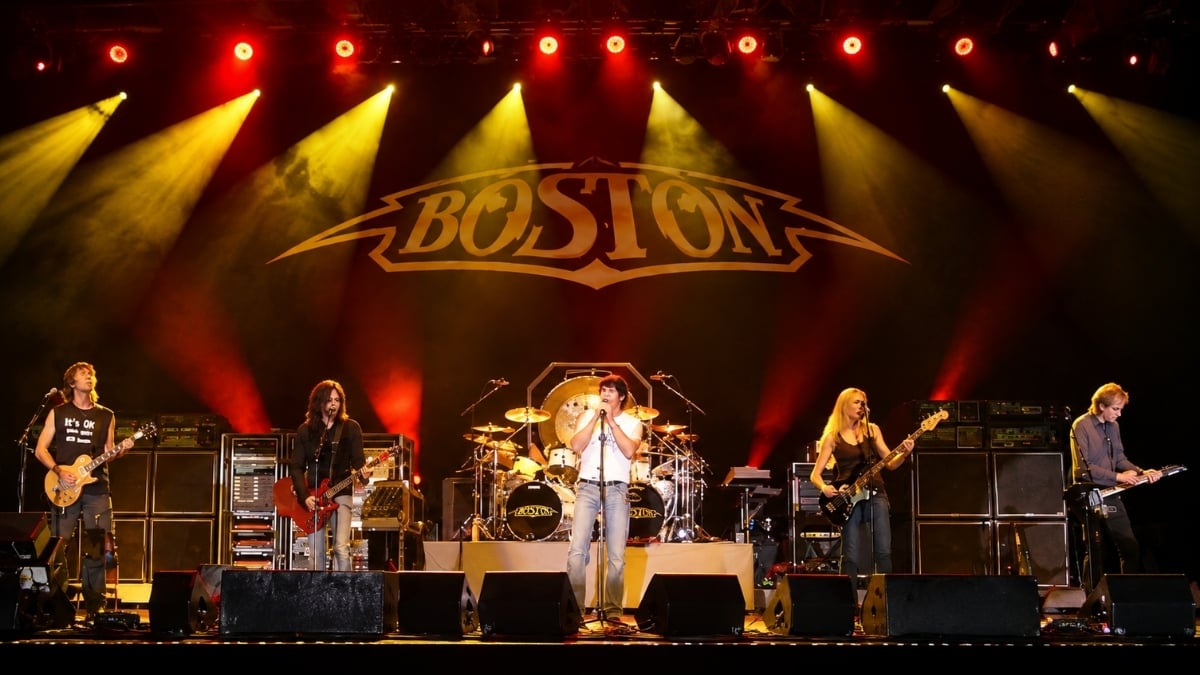
The opening acoustic is a hundred dollar Yamaha 12 string. That is the whole record in one detail. The electric weight comes from a 1968 Les Paul Goldtop with P-90s, an Ampeg V4 and a Marshall 100 watt head, run through a prototype Power Soak, an attenuator Scholz built around a giant resistor pulled from theatrical lighting gear. It let him drive an amp into saturation at basement volume. Everything landed on a Scully 284-12, a one inch 12 track, through a Dan Flickinger console, then transferred to a 3M M79 two inch 24 track that lived in a remote truck driven up from Providence and patched in through a basement window, jumping from 15 inches per second to 30 on the way over. The layering came from engineer Steve Hulse, who showed Scholz how to split guitar tracks hard left and hard right. That one demonstration is basically the Boston sound.
The Voice
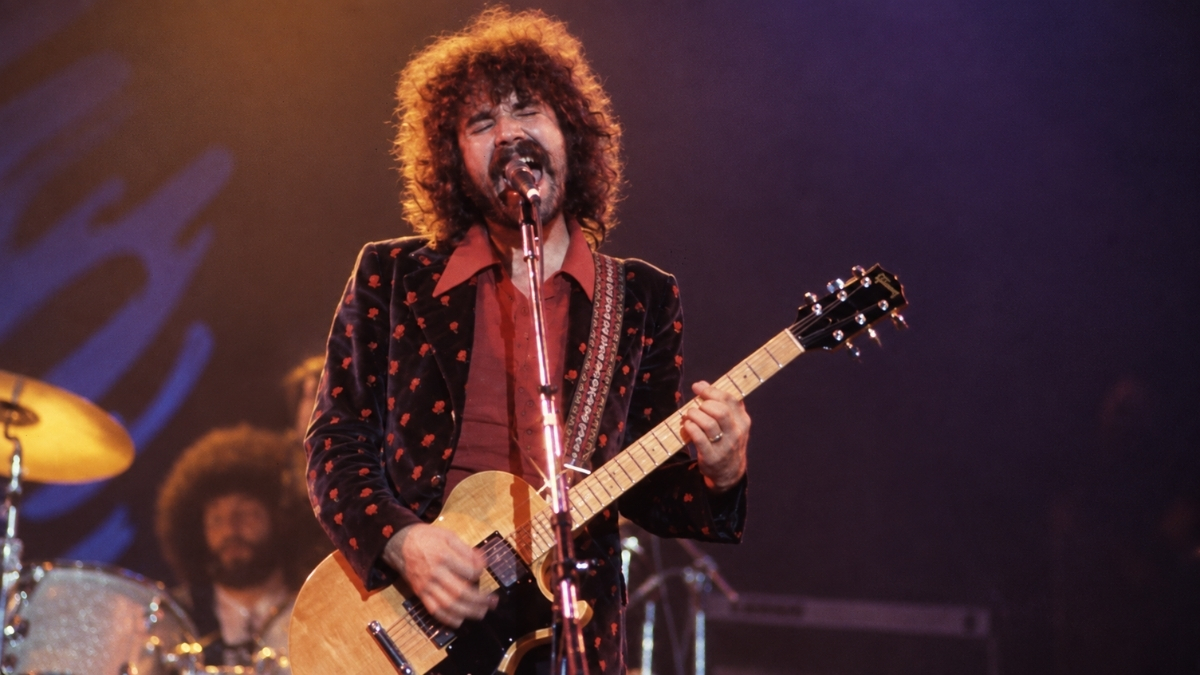
Brad Delp went to Capitol Studio C in Hollywood for the lead, sung into a Neumann 87 straight through the Quad Eight console's onboard preamp with a Quad Eight limiter outboard. Nothing exotic. What makes the track levitate is that almost every vocal except the lead is double tracked, stacked in fast takes, so the harmonies read as one voice instead of four. Boylan has been blunt about it for fifty years: Delp actually hits those notes, nothing electronic helping. The passage where his tenor climbs into the guitar solo was planned in advance and nailed on virtually the first take.
Arrangement Moves + Studio Myths
Here is the one worth stealing. That gentle acoustic fade in at the top was deliberate bait, built to fool radio station compressors into reading the song as quiet so the band would come crashing in louder than everything else on the dial. Pure engineer thinking in a pop arrangement. The mix was performed, not automated: three people riding an API console at Westlake Studios at once, Scholz on guitars, Boylan on drums, Warren Dewey on vocals, everything pushed to the edge of the board on purpose. Boylan put the tension perfectly, saying he wanted any Joe Blow to hear the vocals while Scholz pushed the guitars up unceasingly.
Why Bedroom Producers Still Study It
Because the excuse does not survive contact with this record. Shure SM-57s. A hundred dollar acoustic. A homemade attenuator. A few thousand dollars of production that sold seventeen million copies in the United States. Scholz's rule was that expensive gear can turn out to be a pain and the only objective is having it sound good in the end by any means. What he did have was five years of listening, and ears sharp enough to know when a guitar layer was fighting instead of stacking. That part is trainable, and it is what separates a crowded mix from this one.
Fade Out
The lost demos land next year, and everyone finally hears the rough version of a song that was already, secretly, the rough version. A guy with a Polaroid badge and a furnace for a studio mate sent tape to twenty four companies expecting rejection letters. Fifty years later the basement is still the loudest room in rock.
Photos:
[1] "Boston (band) - 2008 at the Grand Casino in Hinckley.jpg" https://commons.wikimedia.org/wiki/Category:Boston_(band)#/media/File:Boston_(band)_-_2008_at_the_Grand_Casino_in_Hinckley.jpg
[2] "Boston 1977.JPG" https://commons.wikimedia.org/wiki/Category:Tom_Scholz#/media/File:Boston_1977.JPG
[3] "Brad Delp.jpg" https://commons.wikimedia.org/wiki/Category:Brad_Delp#/media/File:Brad_Delp.jpg
Comments:
Login to comment on this post