Turn It Down: The Monitor Volume Mistake Quietly Wrecking Your Low End
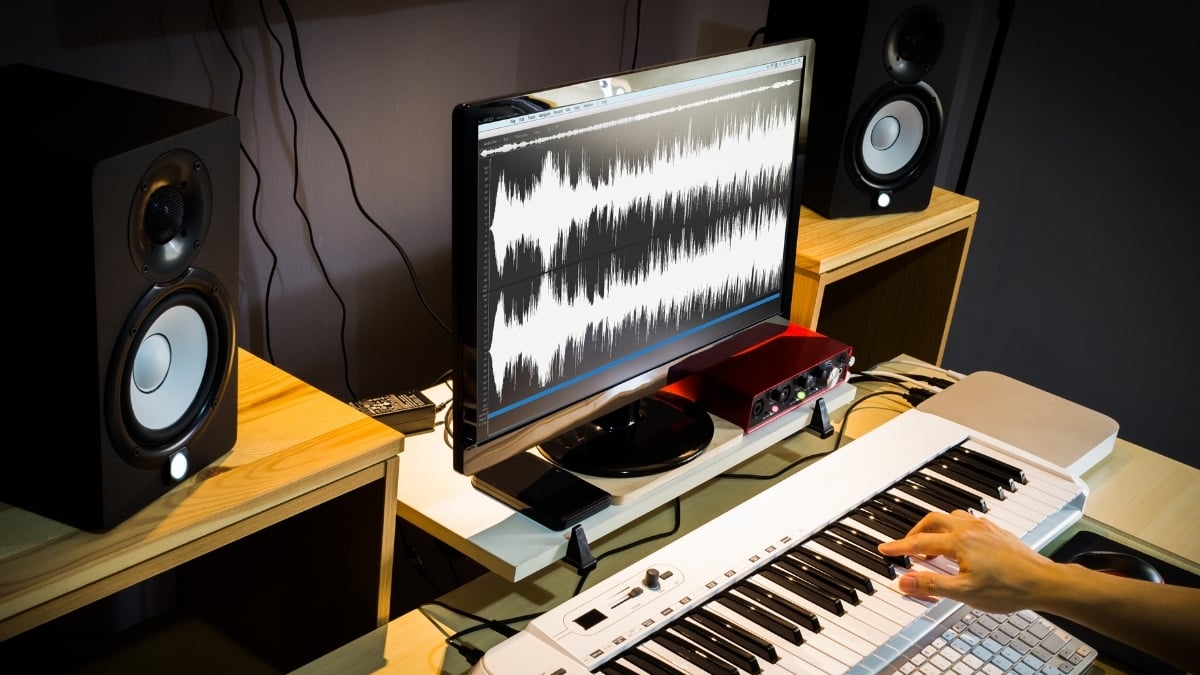
Crank the monitors and everything sounds huge. The bass is thick, the highs sparkle, the whole thing feels finished. That's exactly the problem. Loud lies to you, and it lies most about the parts of your mix you're worst at judging.
This isn't about your mix translating to other speakers. That's a different conversation. This is about the level you set on your own monitors, in your own room, and how that one knob is bending every decision you make before you've touched a plugin.
The equal-loudness curve, without the textbook
Your ears don't hear all frequencies equally. They're most sensitive in the upper-mid range, the 1kHz to 5kHz zone where speech lives, and noticeably less sensitive at the frequency extremes, the deep bass and the high air.
Here's the part that matters for mixing: that imbalance changes with volume. At quiet listening levels, your ears are pretty bad at low end and high end, so a mix can sound mid-heavy and thin. As you turn it up, your sensitivity to the extremes catches up faster than the middle, so the bass and the highs seem to "arrive." This is the equal-loudness contours, often called Fletcher-Munson after the researchers who first mapped them in the 1930s. You don't need the chart. You need the consequence.
The consequence is simple. The louder you monitor, the more your ears flatter the lows and the highs for free.
Why loud monitoring fools your bass decisions
Picture mixing at a genuinely loud level. Your ears are handing you a full, satisfying low end before you've done anything. So when you reach for the bass and the kick, they already sound big enough. You don't push them. You might even pull them back, because everything feels full.
Then you play that mix at a normal volume, in a car, on a laptop, on a friend's speaker, and the low end is gone. Not weak. Gone. Because the fullness you were hearing wasn't in the mix, it was a gift from your ears that only shows up at high SPL.
The same thing happens at the top. Mix loud and the air and presence sound handled, so you under-EQ the highs and the result is dull everywhere else. Loud monitoring makes you under-commit to both ends of the spectrum, which is a brutal combination because those are exactly the regions most producers already struggle to judge.
Mixing too quiet has its own version of this, by the way. Very low levels make everything sound mid-forward and small, and you can end up overcompensating with too much bass and too much top. The point isn't "quiet good, loud bad." It's that the volume you commit to has a built-in tilt, and you need to know which tilt you're working against.
This is also why two producers can mix the same song on the same speakers and end up in completely different places. They weren't disagreeing about the music. They were monitoring at different levels, hearing different frequency balances, and chasing two different targets without realizing it. The knob is a hidden variable in every mix decision, and most people never think to control it.
Find a level and actually commit to it
The fix is a habit, not a purchase. Pick a moderate monitoring level and do the bulk of your mixing there, every session, so your ears learn one consistent reference.
A practical target for a small room is conversational-loud. You should be able to talk over the music without shouting. If you have an SPL meter, or a phone app that does the job well enough, somewhere in the region of 75 to 85 dB SPL is the commonly cited working range, and the lower end of that is fine for a bedroom setup. The exact number matters less than the consistency. The goal is that "normal" sounds the same every time you sit down, so you're not relearning your own room at a new volume every session.
Mark the knob. Tape, a pen dot, a screenshot of your interface software's output level, whatever. When you drift off it, and you will, especially a couple of hours in when fatigue makes you want more, the mark tells you you've drifted.
The quiet check, and what it reveals
Mixing at one level is the discipline. Checking at others is the safety net.
Turn it way down, quiet enough that it's almost background music, and listen. At low volume, your ears strip away the extremes and show you the core. The most important question a quiet check answers: can you still hear the vocal, the snare, the main hook? If the lead element survives at near-whisper volume, your balance is solid. If it vanishes, your balance is leaning on volume to hold itself together, and it'll fall apart on small speakers.
Quiet listening is also where masking and balance problems get loud, ironically. With the flattering low end and air pulled out of the picture, a buried vocal or a kick that's all click and no body has nowhere to hide.
The multi-volume pass before you bounce
Before you commit a mix, run a deliberate three-level pass.
Loud, briefly. This is for excitement and for catching anything genuinely harsh or fatiguing. Keep it short, loud listening tires your ears fast and you don't want to make decisions here, just observations.
Your normal reference level. This is where the real judgment happens and where the mix should sound right by default.
Quiet. The balance check. Lead audible, low end present but not relying on being cranked, nothing important disappearing.
If the mix holds up across all three, you've got something that isn't propped up by a single playback condition. If it only works loud, you've mixed for the showroom, not for wherever people actually listen.
Why this beats buying better monitors
It's tempting to think the answer to "my low end is unreliable" is nicer speakers. Better monitors help, sure. But a great pair of monitors played at an inconsistent, too-loud level still feeds you a moving target. The equal-loudness effect is happening in your ears, not your speakers. No amount of gear opts you out of your own hearing.
Setting a consistent, sane monitoring level is free, it takes one session to build the habit, and it fixes a whole category of low-end and brightness mistakes at the source. Turn it down, keep it there, and check the edges. Your mixes get more reliable and your ears last longer in the bargain.

Comments:
Jun 10
Jun 17
Jun 17
Login to comment on this post