Remembering Juan Atkins and the Basement Sync Trick Behind No UFO's
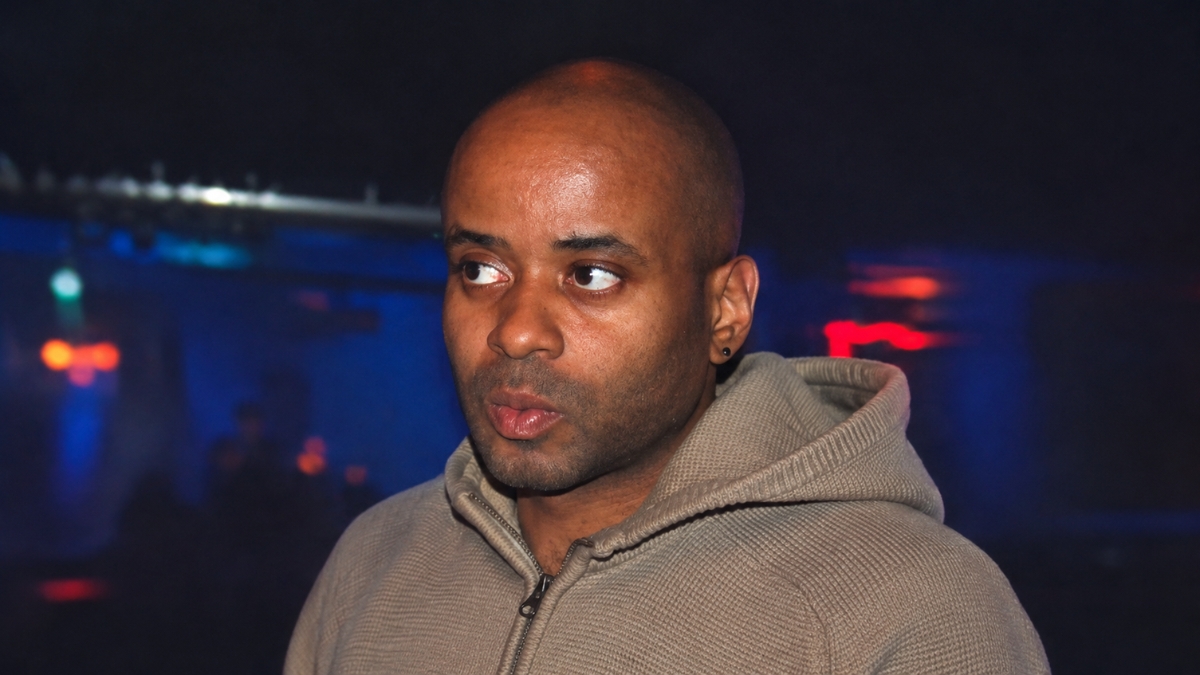
Juan Atkins was booked to play YuYu in Mexico City on October 31. He never made it to the decks. He was found unresponsive in his hotel room before the gig, and on November 1 his agency confirmed he had died. He was 64. A week earlier he had been playing ADE in Amsterdam. Kevin Saunderson called him "the originator of techno," and Derrick May, Sven Väth and Tiga all posted tributes. Read the obituaries and one record keeps showing up in every single one: a 1985 twelve-inch called "No UFO's," catalogue number M-001, the very first release on Atkins' own Metroplex label. Plenty of people call it the first proper techno record. It was made in a basement.
Back Then: The Origin Vibe
Detroit, mid-eighties. Atkins had just split from Cybotron, the duo with Rik Davis that already had Detroit moving to "Alleys of Your Mind" and "Clear." Davis was drifting toward rock. Atkins wanted machines, all the way down. So he set up a home studio he called Metroplex Soundworks in a basement: a Tascam eight-track, a 16-channel board, a pile of synths and drum boxes. He shopped the new track to other labels, they passed, and he put it out himself on his own Metroplex imprint. April 1985, catalogue number M-001.
The Spark That Lit It
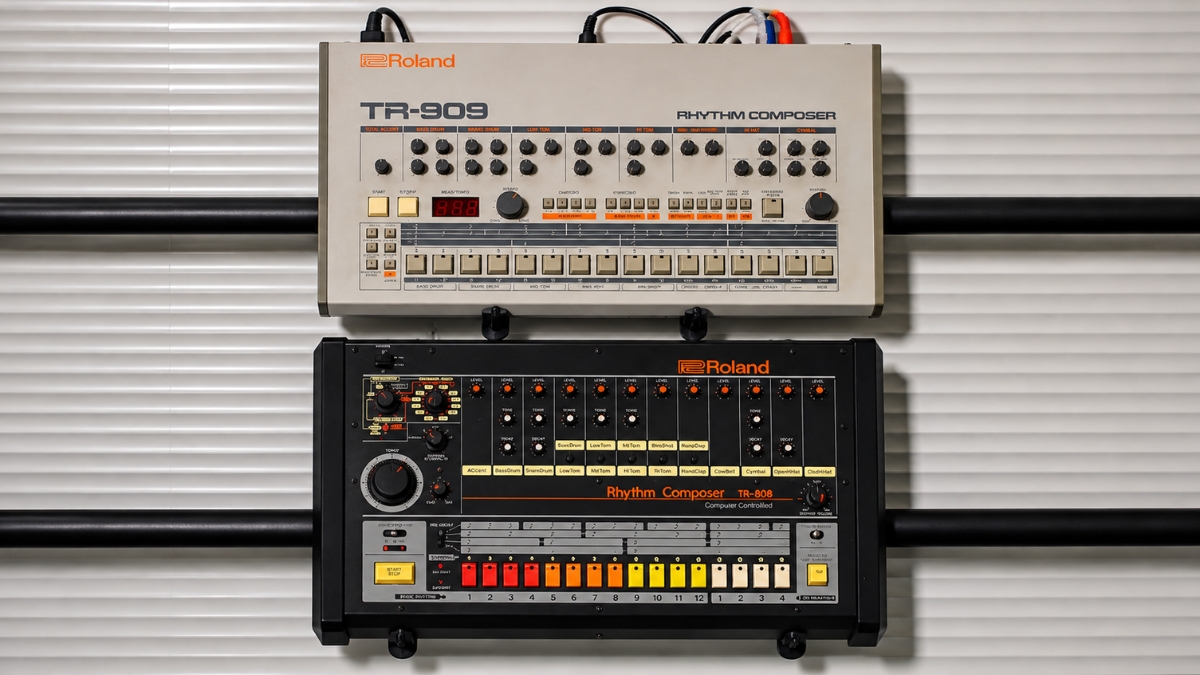
MIDI was brand new. "No UFO's" was the first time he chained two drum machines together: a Sequential Circuits DrumTraks sending MIDI out, and a Roland TR-909 slaving to it. Two boxes from two different companies, finally talking. "When I'd MIDI out of the DrumTraks and MIDI into the 909, it was a perfect sync," Atkins told Sound on Sound.
Perfect, with an asterisk: hitting start on the DrumTraks didn't automatically start the 909, and whether the patterns lined up depended on where playback began. Anyone who has fought a clock source in a modern DAW setup knows that feeling exactly. He made it work anyway, and that sync is the floor the whole track stands on.
The Beat Anatomy
The 909 kick sits dead on the quarter notes, four on the floor, no apology. The hi-hats are the sneaky part. Most records of that era leaned on one drum machine at a time, but here two closed-hat patterns are stacked on top of each other, so the top end feels thicker and more restless than a single pattern ever could. Then there's what's missing. No fills. No dropouts.
The groove never breathes in and out the way a band would. All the movement comes from parts entering and leaving and the percussion getting denser or thinner, with a 909 tom pattern rolling in during the back half. Strict repetition, but never static. That tension is basically the techno rulebook, written in 1985.
 Textures + Sauce
The bass is the engine. A Sequential Six-Trak plays it, fired by a Roland MSQ-700 sequencer, and it comes out squelchy and rubbery, like a machine chewing on its own wiring. Over that, a Sequential Circuits Pro-One throws stabs and drones that Atkins sent through a Lexicon PCM-60, so they hang in a cold digital room instead of sitting dry.
A white-noise synth crash keeps returning to mark each new section, almost like a door slamming in a long corridor, and the track opens with a single bass note that drops in pitch, a little landing sound before the ship powers up.
The Voice
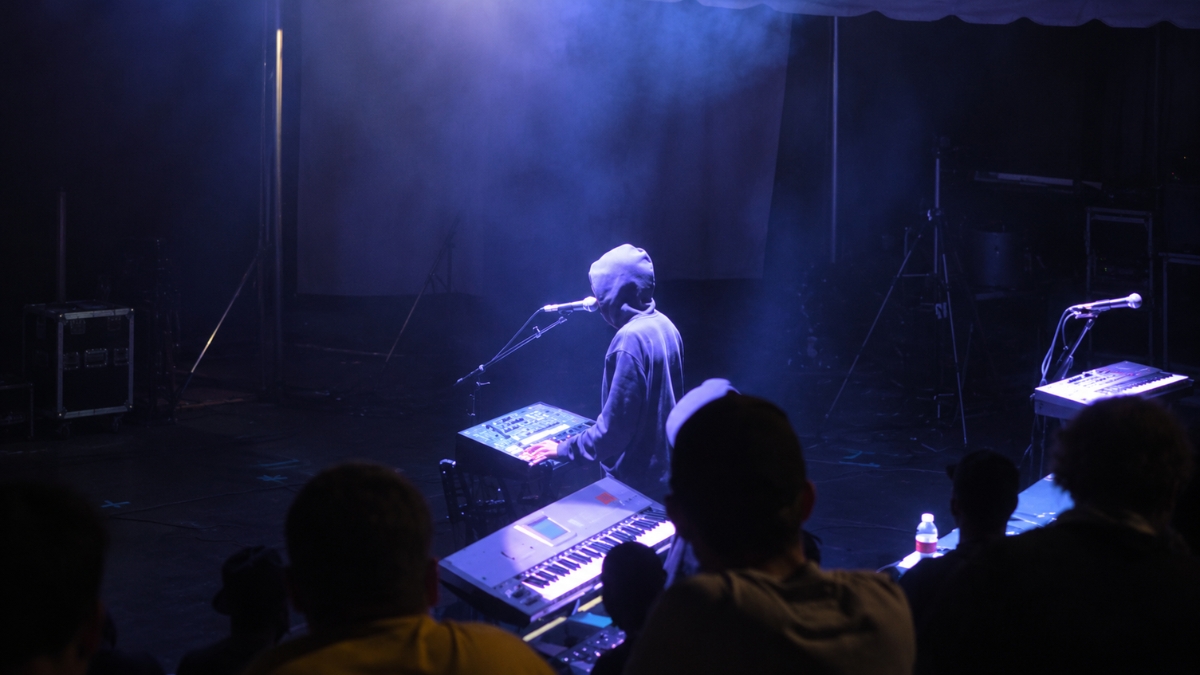
The vocal is half spoken, half sung, recorded through a Sennheiser MD 421, the same dynamic mic engineers usually point at toms and guitar cabs. Atkins doubled his own lines and split the takes left and right, which leaves the centre of the stereo field wide open for that bassline.
When the hook arrives, the vocal snaps to the middle. Then the fun part: he caught fragments of the vocal in a Lexicon delay and froze them, so words stutter and repeat like a transmission breaking up. Detached, a bit eerie, and very human underneath the robot costume.
Arrangement Moves + Studio Myths
The final mix didn't go to a fancy mastering deck. It went down to a Tascam 22-2, a domestic two-track reel machine taking seven-inch reels. "It wasn't like a professional machine," Atkins admitted. Listen closely and some of the section changes sound less like sequencer pattern switches and more like tape edits, which is part of the lore: nobody is fully sure where the machines end and the razor blade begins.
The other legend is true. Derrick May took copies to Chicago, and Frankie Knuckles played it at the Power Plant. The track ended up bigger in Chicago than in its own hometown, a Detroit record that found its first real crowd nearly three hundred miles away.
Why Bedroom Producers Still Study It
Because the whole thing is a lesson in doing more with less. Atkins called it "a total home recording," and he wasn't being modest. Two drum machines that barely wanted to sync, a couple of mono synths, one dynamic mic, an eight-track and a consumer reel deck. The takeaways are practical.
Layer the same sound from two sources when one feels thin. Let the arrangement do the work that fills would normally do. Pan your doubles wide and protect the centre for whatever carries the groove. And if the gear fights you, the fight might be the sound.
Fade Out
Forty-one years on, the record that labels turned down is the one every obituary leads with. Atkins once said of it, "It still sounds fresh today." Put it on now, with the news still raw, and that stuttering voice sounds like it's calling from somewhere a long way off. Still transmitting.
Photos:
[1] "Model 500.jpg" https://commons.wikimedia.org/wiki/File:Model_500.jpg
[2] "Juan Atkins.jpg" https://commons.wikimedia.org/wiki/File:Juan_Atkins.jpg
[3] "Roland TR-808 & 909.jpg" https://commons.wikimedia.org/wiki/File:Roland_TR-808_%26_909.jpg

Comments:
Login to comment on this post