Your Ears Are Literally Reshaping Your Brain Right Now

A new neuroscience study just proved what we've been doing at SoundGym actually changes the physical structure of your cortex.
A paper just dropped in the Journal of Neuroscience, one of the most respected neuroscience journals in the world - and it basically validates everything being built here.
The study is called "The Tuned Cortex" and it was published in February 2026 by a team led by Erik Wing at Baycrest Hospital. The researchers wanted to answer a deceptively simple question: what happens to your brain when you spend years getting really, really good at something that demands sharp perception, focused attention, and deep memory, all at the same time?
Sound familiar? It should.
The Experiment
They studied birdwatchers. Yeah, birdwatchers.
They took 29 expert birders, people who can hear a trill from 50 meters away and tell you the species, the sex, and probably what it had for breakfast, and compared their brains to 29 matched beginners. Same age ranges, same demographics. The only difference was expertise.
They used diffusion-weighted MRI, which measures how water molecules move through brain tissue. The tighter and more organized the neural architecture, the more constrained that movement becomes. Think of it as measuring how "dialed in" your brain hardware is.
They also ran functional MRI while participants did identification tasks, recognizing both familiar local species and unfamiliar ones they'd never encountered in the wild.
What They Found
Here's where it gets wild.
The expert brains were physically different. Not in a vague, hand-wavy "neuroplasticity is cool" way. In a measurable, structural, show-up-on-a-scan way.
The brain regions responsible for attention and perception were more compact in experts. Lower mean diffusivity in frontoparietal areas (the parts of your brain that control where you focus and how you process incoming sensory information) and posterior cortical regions (where high-level pattern recognition happens). The neural tissue was denser, more tightly organized, more efficient.
And this wasn't just a cosmetic difference. The more compact these regions were, the better the experts performed. Tighter brain structure directly predicted higher identification accuracy, especially for unfamiliar species they had to figure out on the fly.
But the finding that really made me sit up straight was this one:
These structural changes persisted into old age.
Older experts still had more organized brain regions than age-matched beginners. The expertise didn't fade with time, it appeared to build what neuroscientists call "cognitive reserve." A buffer against the normal decline that comes with aging. The researchers even found that older birders were better at remembering completely unrelated information (like random faces) when they could connect it to their domain knowledge.
Years of focused perceptual training didn't just make them better at birds. It made their brains more resilient, period.
OK, But What Does This Have to Do With Mixing?
Everything.
Think about what birding actually demands from the brain. You hear a sound in a noisy environment. You isolate it. You compare it against a massive internal library of patterns you've built over years. You make a split-second identification. You remember it.
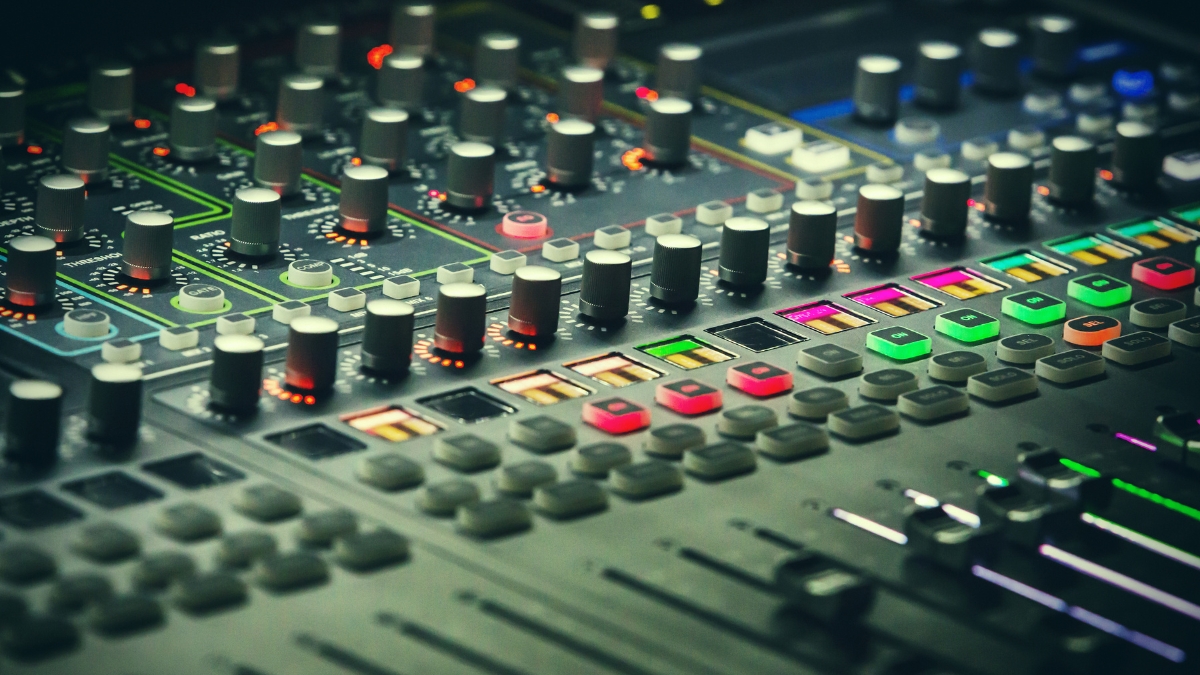
Now think about what you do in a mixing session. You hear a frequency buildup in a dense arrangement. You isolate it. You compare it against the mental library of tonal references you've built from training. You reach for the right EQ move. You remember what worked last time and what didn't.
The cognitive architecture is identical. Perception. Attention. Memory. Working in tandem, under pressure, with real stakes.
The study used birding because it's a clean, testable domain. But the researchers themselves said their findings have implications for any complex skill that engages these same processes together. They're not talking about passive listening or casual dabbling, they're talking about the kind of focused, repeated, progressive training that builds expertise over time.
They're talking about what you do every day on SoundGym.
What This Means For Your Ear Training
Let's get specific about why this matters for you.
1. Your daily workouts are physically remodeling your auditory cortex.
Every time you do an EQ match, a frequency identification, a compression detection exercise, you're not just "practicing." You're driving structural changes in the brain regions that handle auditory attention and perception. The study shows this isn't metaphorical. The tissue itself becomes more organized, more efficient, more precise. You're literally building better hardware.
2. The gains compound over time.
This wasn't a study about people who trained for a few weeks. These were experts with years of accumulated practice. The structural differences were proportional to expertise level. That means every session you log, every streak you maintain, every level you push through, it's adding up in ways that go beyond your leaderboard score. It's adding up in your cortex.
3. You're building cognitive reserve for the long game.
This is the one that doesn't get talked about enough. If you're in your 20s or 30s grinding through ear training, you might think the benefit is purely about getting better mixes right now. But this study suggests you're also building a structural buffer that protects your auditory cognition as you age. Your trained ears aren't just sharper today, they may stay sharper for decades longer than untrained ones.
4. Transfer effects are real.
Remember how older birders could remember random faces better when linked to their expertise? That's transfer, domain-specific training benefiting general cognition. SoundGym users report this all the time. They start noticing things in everyday life they never heard before. Conversations in noisy rooms get easier. Music listening becomes richer. Environmental awareness sharpens. This study gives us a neurological mechanism for why that happens.
The Bigger Picture
There's a narrative in music production culture that ear training is optional. That you can just trust your eyes (the meters, the analyzer, the waveform). That talent is something you either have or you don't.
This study quietly destroys that narrative.
What it shows is that expertise isn't a gift, it's architecture. It's physical infrastructure built through thousands of hours of focused engagement. And that infrastructure doesn't just make you better at one thing. It makes your entire perceptual system more robust.
The bedroom producer who spends 15 minutes a day on frequency training isn't just learning to spot a 3kHz buildup. They're remodeling the neural circuits that govern how they hear, how they focus, and how they remember, and those changes show up on a brain scan and persist across a lifetime.
That's not motivation. That's neuroscience.
So What Should You Do With This?
You probably already know the answer. Keep showing up. Keep training. Keep pushing into the exercises that feel hard, because that's where the structural remodeling happens, when you're working at the edge of your current ability, not coasting through what's already easy.
The study found the biggest structural differences in brain regions that were engaged when experts processed unfamiliar stimuli, birds they hadn't seen before, species outside their comfort zone. That maps perfectly to leveling up on SoundGym. The exercises that challenge you the most are the ones driving the deepest changes.
And if you've fallen off your training streak? This is your reason to start again. Not because of guilt or FOMO, but because the science is now crystal clear: focused perceptual training physically builds a better brain. And unlike most things in life, the returns don't diminish with age. They accumulate.
Your brain is listening. Train it well.
The study: Wing, E.A., Chad, J.A., Mariotti, G., Ryan, J.D., & Gilboa, A. (2026). "The Tuned Cortex: Convergent Expertise-Related Structural and Functional Remodeling Across the Adult Lifespan." Journal of Neuroscience, e1307252026. DOI: 10.1523/JNEUROSCI.1307-25.2026


Comments:
Mar 29
Apr 07
Jul 16
Login to comment on this post