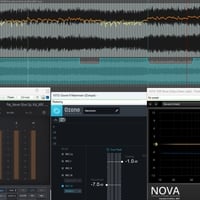
I don't know what these are... what I'm listening to and in the 2nd game I couldn't figure out how to play. Will this help someone who is just starting learn?
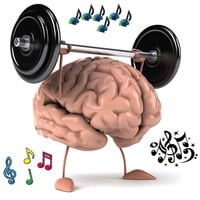
The different games are a pain to learn, but once you understand the mechanics they play well. Each one has a video which is worth watching until you get how each game actually works. Will ear training help you in the long run. Yes. And it will probably help you a lot in the medium run. But you won't really notice any differences for the first month or so.
You can also decide which subset you want to start with. If you are really new to audio I recommend starting wit the basics EQ and Compression. You can also limit the games there that you play. For example in EQ if you don't really know what to listen for then a game like EQ Cheetah or even EQ mirror is just frustrating and likely counter productive. Having said that everyone learns differently - try the games, figure out which ones you think will help you advance - limit your daily workout to those. Expand as you get better.
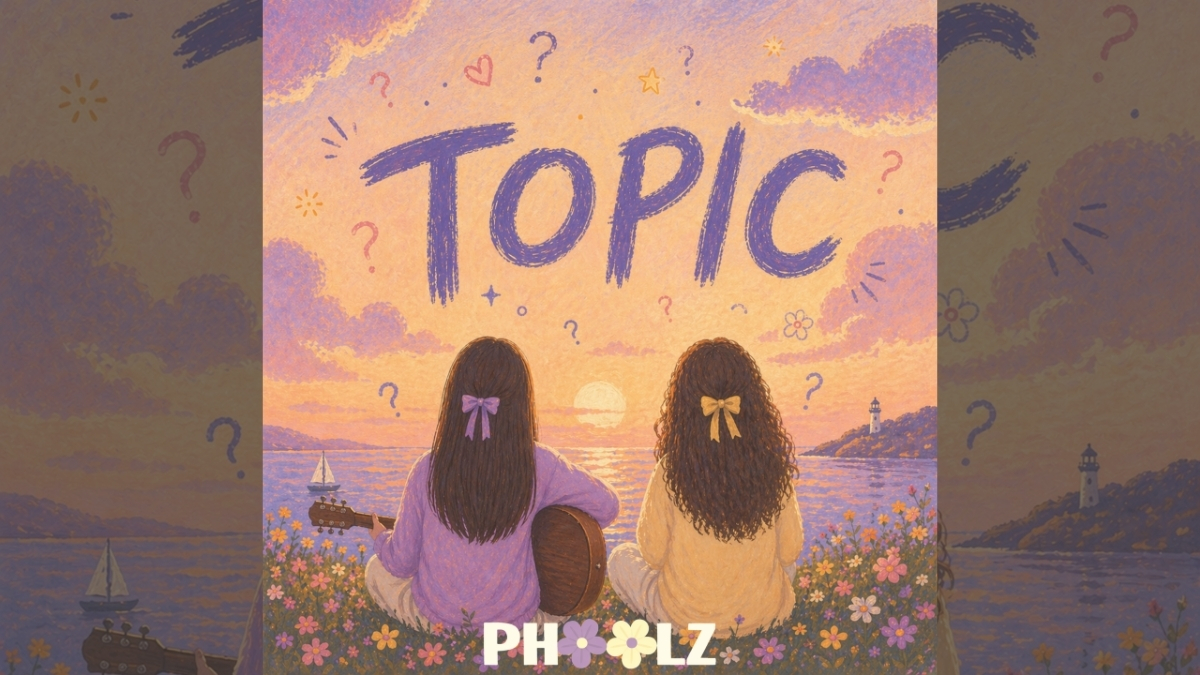
Music Spot: Not Really Like That - Joseph Shin (Nagne)
Built on a bassline and a four-beat kick, Not Really Like That pulls from Queen, Dostoevsky, and Justin Timberlake to paint a portrait of a man too proud to act on his own ambitions, a track that makes creative paralysis sound this cool. Not Really Like That by @Nagne . is this month's MusicSpot!
casn someone explain me how to dissort vocals in hoodtrap but without loosing understability? As i think is the way to dissort the vocal is sending the bass and the vocal in one channel which has distorsion, but when i start adding other instruments to that channel, i feel that im destroying the whole mix
sorry if im not explaining well or if im doing it in a wrong way and im posting fake/bad info, but i liearned until now with youtube tutorials and tiktoks
Everything in audio is contextual, so what is considered good or bad is often relative.
With that in mind, the issue may not be that distortion is ruining your mix, but rather a consequence of what distortion actually does. Distortion adds harmonic content—both odd and even harmonics—which can increase the density of a sound. When distortion is applied across many sources, those additional harmonics can begin to compete for the same frequency space, leading to frequency masking and a loss of clarity throughout the mix.
Instead of applying the same type of distortion everywhere, try varying the character and placement of the distortion. For example, you might focus vocal distortion in a frequency range that enhances its character while keeping it clear of the bass and other low-frequency elements. Likewise, if you're working with two heavily distorted sources, aim for complementary tones that occupy different areas of the spectrum rather than competing for the same space.
It's also worth experimenting with different types of distortion. Hard clipping, overdrive, fuzz, and saturation each generate harmonics differently and can serve very different purposes within a mix.
And, as with many aspects of mixing, sometimes less is more. A subtle amount of distortion applied intentionally can often have a greater impact than heavily distorting every element in the session.
I realize that this is a wordy answer but I hope it helps. Happy mixing!
Hey, I'm an independent artist from China, does anyone want to listen to my tracks or demos and see if we can create something huge together in the near future?
We use cookies to improve your experience. Essential cookies keep the site running. We also use optional cookies to enhance performance, analyze traffic, and personalize ads. By clicking “Accept”, you agree to the use of all cookies.
Jun 25, 12:43
Jun 25, 19:09
Jun 25, 21:01